9 Tips: How to Choose the Right Context Engineering Platform for Your AI Stack
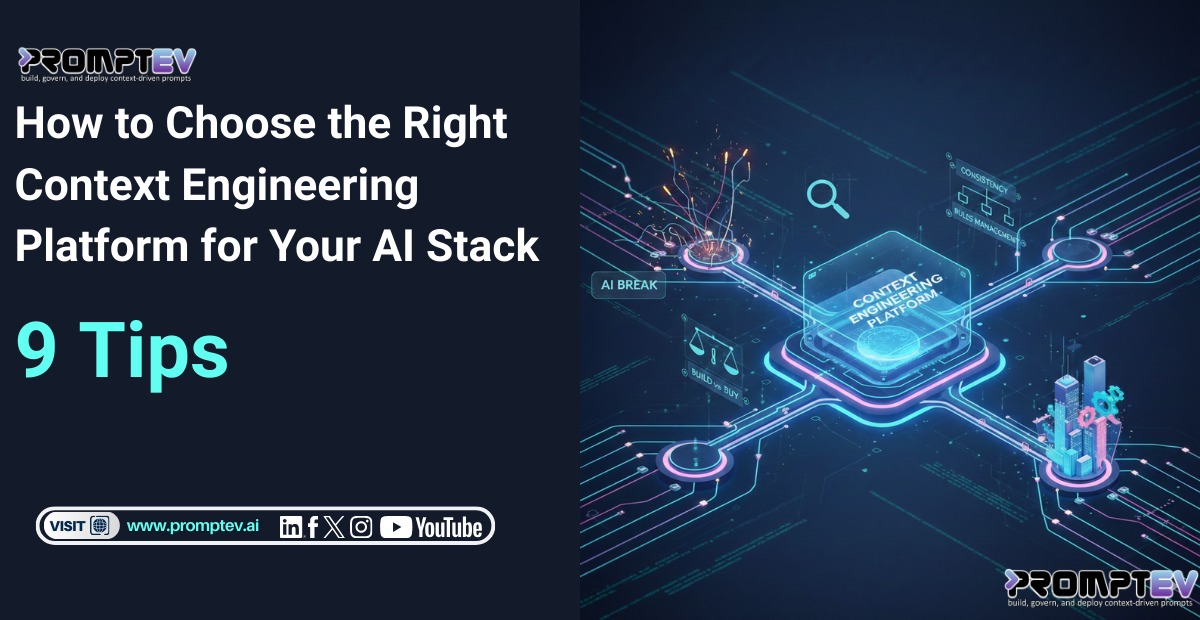
Choosing the right context engineering platform is not about features, dashboards, or pricing alone. It is about understanding how your AI behaves today and ensuring it continues to perform as your business grows.
Every team that skips this step ends up frustrated when AI looks smart in demos but fails in real-life scenarios.
In this article, we will discuss the 9 actionable tips to choose the right context engineering platform.
Let’s have a look for a better understanding!
Tip 1: Observe Where Your AI Breaks
Before choosing any content engineering platform, you should understand your problem. It is very common, many teams make the mistake of jumping straight to vendor comparisons. But if you don’t know why your AI is failing, no platform will solve your issues.
You need to observe how your AI performs in real situations. Notice if it forgets rules you thought were permanent, if it answers the same question differently each time, or if it mixes old and new information inconsistently.
Besides, you should also check whether different teams get varying results from the same AI setup. These are all signals that your AI suffers from weak context management. A platform that cannot directly address these failure points is unlikely to meet your needs.
Tip 2: Choose a Platform That Separates Context From Prompts
One common trap is choosing a platform that encourages you to write bigger, more complicated prompts. No doubt, this may feel like progress at first. But it creates hidden problems as your AI scales.
On the other hand, the right platform helps you separate the different layers of AI behavior. Your business rules, company knowledge, tone, and retrieval logic should all exist independently of the prompts themselves. This separation is crucial because your business and data evolve constantly. Remember one important thing: a platform that depends heavily on prompt rewriting will slow down your AI over time.
Tip 3: Check How the Platform Handles Growing Knowledge
AI systems are only as good as the knowledge they access, and your knowledge base is never static. What works well with ten documents may fail when you reach hundreds or thousands. A strong context engineering platform doesn’t just store information; it actively manages it.
It decides which pieces of knowledge are relevant for each task, filters out unnecessary data, and ensures that the AI remains focused. This prevents confusion and maintains consistent responses even as your content changes.
Tip 4: Ensure One Context Can Serve Multiple AI Use Cases
Most teams begin with a single chatbot or AI agent, but over time, AI responsibilities expand to customer support, sales assistance, and internal knowledge tools. If each AI application requires a separate setup, you are creating silos that defeat the purpose of context management.
The right platform provides a shared context layer, allowing multiple AI tools to operate from the same set of rules and knowledge. This ensures consistency across your organization and saves time and effort as your AI ecosystem grows.
Tip 5: Evaluate How Easy It Is to Update Context
Your rules, policies, and content will often change. If updating context is difficult, your AI will constantly lag behind your business. The best platforms make updates easy while maintaining control and safety.
Non-technical team members should be able to make changes. Plus, these updates should apply universally without requiring engineering intervention. Remember, rollback options and visibility into changes are also important to correct mistakes. A platform that fails in this area will leave your AI fragile.
Tip 6: Examine Rule and Policy Enforcement
Not all platforms enforce rules in the same way. Some treat rules as suggestions, leaving AI behavior unpredictable. The platform you choose must enforce critical rules, such as what the AI must never say, how to handle sensitive topics, and which rules take priority when conflicts arise.
Without strong enforcement, your AI may appear intelligent while actually acting in undesirable ways. A reliable platform treats rules as non-negotiable, ensuring stability and trust across all AI interactions.
Tip 7: Check Model Flexibility Before Committing
You should never assume you will use the same AI model forever. Costs, performance, and capabilities change over time, and locking your context to a single model can create major headaches down the line.
The right platform allows you to switch models without rewriting the entire context system. This flexibility protects your investment and ensures your AI remains scalable, adaptable, and cost-effective over the long term.
Tip 8: Don’t Ignore Security and Access Control
Context defines AI behavior. You need clear control over who can view and edit context, and you need transparency for all changes.
A good platform provides strong access controls, tracks modifications, and prevents unauthorized edits. If context is mismanaged, even small errors can have large impacts on your AI’s behavior. Security and accountability should never be an afterthought; they are fundamental to a reliable AI system.
Tip 9: Be Honest About Build vs Buy
Many teams build their own context systems, believing it gives them more control. In reality, building a platform from scratch often leads to constant maintenance and increased complexity. This thing also enhances the overall cost of AI.
On the other hand, a dedicated context engineering platform may have an upfront cost, but it provides tested systems and allows you to scale. Once AI moves beyond experimentation, buying a platform is often a cheaper choice.
Wrap Up
Choosing the right context engineering platform is not about picking the most popular tool with flashy features. It’s about understanding your AI’s weaknesses, ensuring stable context, and creating a system that grows with your business. In this article, we have discussed the 9 tips to choose the right context engineering platforms. If you’re going to pick a context engineering platform, this article will help you a lot. Last but not least, the right platform turns your AI from a fragile experiment into a productive business asset that evolves with your needs.
FAQs
1. What is a context engineering platform in AI?
A context engineering platform is a system that manages the knowledge, rules, and context your AI uses. It ensures that AI gives consistent, accurate, and controlled responses across multiple use cases.
2. Why is separating context from prompts important?
Separating context from prompts allows rules, knowledge, and behavior to be updated independently. This makes AI more stable, easier to maintain, and scalable as your business grows.
3. How do I know if my AI needs a context engineering platform?
You likely need one if your AI forgets rules, gives inconsistent answers, mixes old and new information, or serves multiple teams and use cases.
4. Can one context engineering platform support multiple AI models?
Yes. The best platforms are model-agnostic, allowing you to switch or upgrade AI models without rebuilding the context or rules.
5. Should I build my own context system or buy a platform?
While building is possible, it often leads to high maintenance and complexity. Buying a dedicated platform usually reduces long-term costs, ensures stability, and speeds up scaling.

Faisal Saeed is Founder & CEO of Promptev, building next-gen context engineering infrastructure that enables teams to orchestrate, scale, and deploy production-ready generative AI systems with confidence.